
Supporting Deaf Employees and Employees with Hearing Loss: Employer Guide
Introduction
Deafness and hearing loss are among the most common conditions in the UK workforce. According to RNID, over 17 million people in the UK have hearing loss, and 9 million people of working age have some degree of hearing loss (RNID).
Your workforce may include people who have been deaf from birth or childhood, Deaf people whose first or preferred language is British Sign Language (BSL), deafened adults who lost their hearing later in life, sometimes suddenly, and people whose hearing has changed gradually over the years. Each may communicate differently and need different support.
Hearing loss that develops gradually is often hidden. Many people adapt for years before they notice how much effort listening takes, and many do not tell their employer, because they worry about being seen as less capable or they do not know what help is available. Hearing can also change gradually, so an employee may not realise that missed details, tiredness or difficulty in meetings are linked to their hearing.
This guide is for employers, HR teams, line managers and occupational health professionals. It explains how deafness and hearing loss in the workplace can affect someone, what the law expects, and the practical steps that help in supporting deaf employees and employees with hearing loss to stay in work and do their job well.

Deafness, Hearing Loss and Related Conditions
Deafness and hearing loss affect people in different ways. Two people with the same diagnosis may need very different support, so it is always worth asking the employee what they find difficult.
- Sensorineural hearing loss: caused by changes in the inner ear (the cochlea) or the hearing nerve. It is the most common type, is usually permanent, and often develops gradually, for example with age or after long exposure to loud noise. Sounds can seem quieter and less clear, so speech is harder to follow, especially in background noise.
- Conductive hearing loss: where sound cannot pass easily through the outer or middle ear, for example because of earwax, an ear infection or a problem with the eardrum or the small bones of the middle ear. It is sometimes temporary and may be treatable.
- Mixed hearing loss: a combination of sensorineural and conductive hearing loss.
- Sudden hearing loss: hearing loss in one or both ears that comes on suddenly should be treated as an emergency. The NHS advises asking for an urgent GP appointment or contacting NHS 111, because some causes need to be treated quickly. If an employee tells you their hearing has changed suddenly, encourage them to get medical help straight away and do not wait to see if it improves (see NHS advice on hearing loss).
- Tinnitus: hearing sounds such as ringing, buzzing or humming that do not come from outside the body. It often goes with hearing loss and can affect concentration, sleep and tiredness, particularly in quiet or noisy spaces.
- Ménière’s disease: a condition of the inner ear that causes attacks of vertigo (a spinning feeling), tinnitus, reduced hearing and a feeling of pressure in the ear. Attacks can start suddenly and last from a few minutes to up to 24 hours, so flexibility at work can make a real difference.
- People who are deaf from birth or early childhood: some people have been deaf all their lives. Some use spoken English, lip-reading and hearing technology, and some are Deaf British Sign Language (BSL) users, for whom BSL is their first or preferred language and English may be a second language.
- Deafened adults: people who become severely or profoundly deaf as adults, sometimes suddenly. Most have spoken English as their first language and may rely on lip-reading, captions, speech-to-text and written communication. Losing hearing in adult life can be a big change, and people may need time and support to adjust.
Hearing aids and cochlear implants
Hearing aids make sounds louder and clearer, and many can connect to phones, computers and headsets by Bluetooth. They do not restore normal hearing. Background noise, poor acoustics, people talking over each other and poor sound quality on calls can all still make listening difficult.
A cochlear implant is a device fitted during surgery for some people with severe or profound hearing loss who get little benefit from hearing aids. It turns sound into electrical signals that stimulate the hearing nerve. It does not restore normal hearing either, and it can take time to adjust to. People who use hearing aids or cochlear implants may still need adjustments at work.
How Deafness and Hearing Loss Can Affect Work
Being deaf or having hearing loss does not usually stop someone doing their job, but barriers at work can make parts of the working day much harder. Common difficulties include:
- Meetings: following group discussions, especially when people talk over each other, turn away, or speak from the far end of the room.
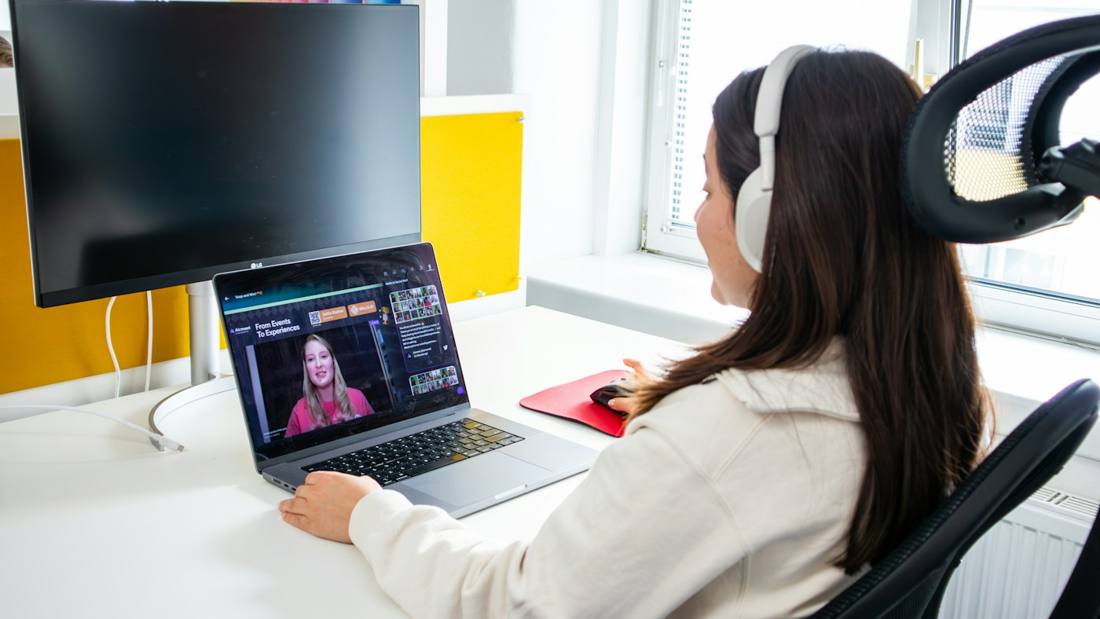
- Phones and video calls: calls take away the visual clues that help with lip-reading, and poor audio, delays and cameras turned off make video calls harder still. For many Deaf BSL users, ordinary phone calls are not accessible at all without a video relay service.
- Noisy or open-plan spaces: background noise, hard surfaces and echo make speech much harder to pick out.
- Listening fatigue: concentrating hard to follow speech all day is tiring. Many people with hearing loss are exhausted by the end of the day, which can affect concentration and wellbeing. Lip-reading or watching an interpreter for long periods is tiring too.
- Written English: for some Deaf BSL users, English is a second language, so long or complex documents and emails may take more time to work through.
- Missed alarms and warnings: fire alarms, vehicle warnings and announcements may not be heard, especially when someone is working alone or away from their usual desk.
- Isolation and confidence: people may withdraw from team chat and social events, avoid speaking up in meetings, or worry about mishearing instructions. A Deaf BSL user can easily be left out of informal conversation if no one makes the effort to include them. This can be mistaken for a lack of interest or a performance problem.
The right adjustments can remove many of these barriers, and early support often prevents problems from building up.
Deafness, Hearing Loss and the Law
England, Scotland and Wales. The Equality Act 2010 protects disabled people from discrimination at work. Under the Act, a person is disabled if they have a physical or mental impairment that has a substantial and long-term negative effect on their ability to carry out normal day-to-day activities. Many deaf people and people with hearing loss or tinnitus meet this definition.
When deciding whether an impairment has a substantial effect, treatment and aids are usually ignored. This means hearing loss is judged as if the person were not wearing hearing aids, so someone who manages well with hearing aids can still be protected.
Employers have a duty to make reasonable adjustments, so that disabled employees are not put at a substantial disadvantage compared with colleagues who are not disabled. The employee must not be charged for reasonable adjustments. Read more on our Equality Act 2010 page.
Northern Ireland. The Disability Discrimination Act 1995 applies and places a similar duty on employers to make reasonable adjustments.
Ireland. The Employment Equality Acts protect people with a disability at work and include a duty to provide reasonable accommodation, known in the Acts as “appropriate measures”, unless this would place a disproportionate burden on the employer (see the Irish Human Rights and Equality Commission guide (PDF)).
Sign languages. British Sign Language and Irish Sign Language are both recognised in law. See Deaf Culture and Language below.
This guide gives general information only and is not legal advice.
Deaf Culture and Language
British Sign Language (BSL) is a language in its own right, with its own grammar, vocabulary and structure. It is not English in signs. The British Sign Language Act 2022 recognises BSL as a language of England, Wales and Scotland. In Ireland, the Irish Sign Language Act 2017 recognises the right of Irish Sign Language (ISL) users to use ISL as their native language. In Northern Ireland, both BSL and ISL are used.
Many Deaf people, particularly those who are deaf from birth or childhood and use sign language, see themselves as members of a linguistic and cultural minority rather than as disabled. The capital D in “Deaf” is often used to show this. That identity deserves respect, and it does not take away legal protection: a Deaf person who meets the legal definition of disability is still protected by equality law and is entitled to reasonable adjustments.
Communication is personal. Some Deaf people use BSL or ISL, some use spoken English and lip-reading, and many use a mix depending on the situation. Do not assume. Ask the person how they prefer to communicate, and plan around their answer.
Reasonable Adjustments for Deaf Employees and Employees with Hearing Loss

Every person is different, so adjustments should be agreed with the employee. Reasonable adjustments for deaf employees and employees with hearing loss may include:
- Headsets: hearing-aid-compatible or Bluetooth headsets that connect directly to the employee’s hearing aids, phone or computer.
- Streamers and remote microphones: devices that send a speaker’s voice straight to the employee’s hearing aids, cutting out background noise in meetings and one-to-ones.
- Live captions: switching on live captions in Microsoft Teams, Zoom or Google Meet, and making captions the default for team meetings.
- Phones: captioned or amplified phones, and Relay UK, which lets people make and receive calls using text, with a relay assistant in between. Deaf BSL users can use a BSL video relay service, which connects the call through an online BSL interpreter.
- Alarms: visual or vibrating alerts, including fire alarms linked to flashing beacons or a vibrating pager, as part of a Personal Emergency Evacuation Plan (PEEP).
- The workspace: a quieter workspace or seating away from noise, with the employee’s back to a wall so colleagues approach from the front, and access to a quiet room for calls.
- Lighting: good lighting on people’s faces, so lip-reading is easier, and avoiding sitting people with their backs to a bright window.
- Meeting etiquette: one person speaking at a time, agendas sent in advance, cameras on during video calls, and the chat used for key points.
- Written follow-ups: notes, actions and important instructions confirmed in writing after meetings and calls.
- Flexible breaks: short breaks after long meetings or calls to manage listening fatigue, and time off for audiology appointments.
- Communication support: BSL interpreters, lipspeakers or speech-to-text reporters for meetings, training sessions and important conversations, arranged with the employee. Use professionals registered with the NRCPD.
- Written and visual communication: instant messaging, email and clear, plain English for everyday contact, so information does not rely on hearing.
- Deaf awareness training: helping managers and colleagues communicate well, including basic BSL for the team of a Deaf BSL user, for example through our deaf and hearing loss awareness eLearning.
Communication Tips for Colleagues
Small changes in the way colleagues communicate can make a big difference. Share these tips with your team:
- Get the person’s attention before you start speaking, for example by saying their name, a light wave or a gentle tap on the shoulder.
- Face the person, keep your mouth visible and make sure your face is well lit.
- Speak clearly at a natural pace. Do not shout or exaggerate your lip movements, as this makes lip-reading harder.
- If something is not understood, say it a different way rather than repeating the same words.
- In meetings, speak one at a time and say who is speaking on calls.
- Reduce background noise where you can, or move somewhere quieter to talk.
- Keep cameras on and captions switched on during video calls.
- When an interpreter is present, talk to the Deaf person, not to the interpreter, and keep looking at them.
- If a colleague uses BSL, learning a few basic signs, such as hello, thank you and good morning, is a welcome gesture.
- Check understanding and follow up important points in writing. Most of all, ask the person what works best for them.

Access to Work and Funding
Access to Work is a government scheme in England, Scotland and Wales that can help pay for practical support for disabled people at work, such as specialist equipment and communication support. Northern Ireland has its own Access to Work (NI) scheme.
Access to Work will not pay for adjustments that an employer is legally required to make as reasonable adjustments. It can help with support that goes beyond this. Applications are made by the employee, and decisions about funding rest with Access to Work.
Ireland. Employers in Ireland may be able to get help through the Work and Access programme from the Department of Social Protection, which can contribute towards a workplace needs assessment and workplace equipment and adaptations. You can check current support and eligibility on gov.ie.
Hearing Loss Workplace Assessments
A hearing loss workplace assessment is a practical, non-clinical look at how being deaf, having hearing loss or tinnitus affects an employee’s work, and what would make it easier. It does not test hearing. It looks at the role in full, the hardest listening situations in the working day, how the employee communicates, their hearing aids, implants or other devices, the working environment, how meetings and calls are run, and health and safety, such as alarms and lone working.
Visualise carries out hearing loss workplace assessments for employers across the UK and Ireland, for people in every kind of role. Assessments are available from £795, by phone, video or in person. We contact the employee within two working days of referral, the assessment takes around two hours, and you receive a clear, actionable report within ten working days. Visualise is fully independent and does not sell equipment, so every recommendation is impartial.
If someone has both sight loss and hearing loss, see our deafblind workplace assessment.
Employees who are unsure whether their hearing is affecting their work can try our free hearing self-screening tool. It does not replace a hearing test or an assessment, but it can be a useful first step.
Illustrative Examples
Mark: hearing loss in an open-plan office
Illustrative example: Mark is not a real person. His story shows challenges that are common for employees with hearing loss.
Mark is a finance officer who works in an open-plan office three days a week and from home for two. Over several years his hearing has slowly got worse, and he now wears hearing aids in both ears. He has not said much about it at work.
His manager notices that Mark has become quiet in meetings and sometimes misses actions agreed on Teams calls. Mark explains that he struggles to follow calls through his laptop speakers, cannot pick out voices when the office is busy, and is exhausted by mid-afternoon. He has started avoiding team catch-ups.
Adjustments that may help Mark include:
- a Bluetooth headset that connects to his hearing aids, for calls in the office and at home
- live captions switched on by default for team meetings, with cameras on
- a desk in a quieter area, with his back to a wall, and a quiet room he can book for important calls
- a remote microphone for face-to-face meetings
- agreed meeting etiquette and written actions after every meeting
- short breaks between long calls to manage listening fatigue
- deaf awareness training for his team
- a review of the fire alarm arrangements, including when he is in the office early or late.
A hearing loss workplace assessment would look at Mark’s role and environment in detail and recommend specific equipment and changes.
Sian: a Deaf BSL user in a data team
Illustrative example: Sian is not a real person. Her story shows challenges that are common for Deaf employees who use British Sign Language.
Sian is a data analyst. She has been deaf since birth, BSL is her first language and she writes English well, though it is her second language. She is very good at her job, but she often misses what is said in the weekly team meeting, hears about decisions second hand and avoids picking up the phone.
Adjustments that may help Sian include:
- a registered BSL interpreter booked by her employer for key meetings, such as team meetings, one-to-ones, appraisals and training
- the agenda, slides and papers shared with the interpreter in advance, and breaks built into long meetings
- the interpreter pinned or spotlighted on video calls, so Sian can always see them
- a BSL video relay service for phone calls, and Relay UK where text works better
- team chat and email for quick questions, and written follow-ups of decisions and actions after every meeting
- visual and vibrating fire alarm alerts, set out in a PEEP
- deaf awareness training for her team, and a basic BSL course for colleagues who want to learn.
A hearing loss workplace assessment would look at Sian’s role, how she communicates and her working environment, and recommend specific changes.
Frequently Asked Questions
Often, yes. Being deaf or having hearing loss can be a disability under the Act if it has a substantial and long-term effect on normal day-to-day activities. The effect is judged as if the person were not using hearing aids, so someone who manages well with hearing aids can still be protected. Many Deaf people do not see themselves as disabled, but they can still be protected by the law.
Common adjustments include compatible headsets, remote microphones, live captions on video calls, captioned phones or Relay UK, BSL interpreters and BSL video relay services for Deaf BSL users, visual or vibrating alarms, a quieter workspace, good meeting etiquette, written follow-ups and deaf awareness training for colleagues. The right adjustments depend on the person and their role.
The employer is responsible for making reasonable adjustments and must not charge the employee for them. In England, Scotland and Wales, Access to Work may help with support that goes beyond what the employer is legally required to provide. Northern Ireland has its own scheme.
Encourage them to get medical help straight away. The NHS advises asking for an urgent GP appointment or contacting NHS 111 for sudden hearing loss in one or both ears, because some causes need to be treated quickly.
Send us a referral using the form on our hearing loss workplace assessment page, or email info@visualisetrainingandconsultancy.co.uk. We contact the employee within two working days and send the report within ten working days of the assessment.
Find Out More
Being deaf or having hearing loss need not mean job loss. With the right adjustments, a supportive manager and colleagues who understand, Deaf employees and employees with hearing loss can thrive at work.
To find out how we can help, read about our hearing loss workplace assessments, see our useful links for hearing loss, or email info@visualisetrainingandconsultancy.co.uk or call 07472 305 268.
For practical everyday tips, read communicating with Deaf employees and employees with hearing loss and accessible meetings for Deaf employees and colleagues with hearing loss.
Last reviewed November 2026.