
By Daniel Morgan-Williams, Founding Director, Visualise Training and Consultancy Ltd.
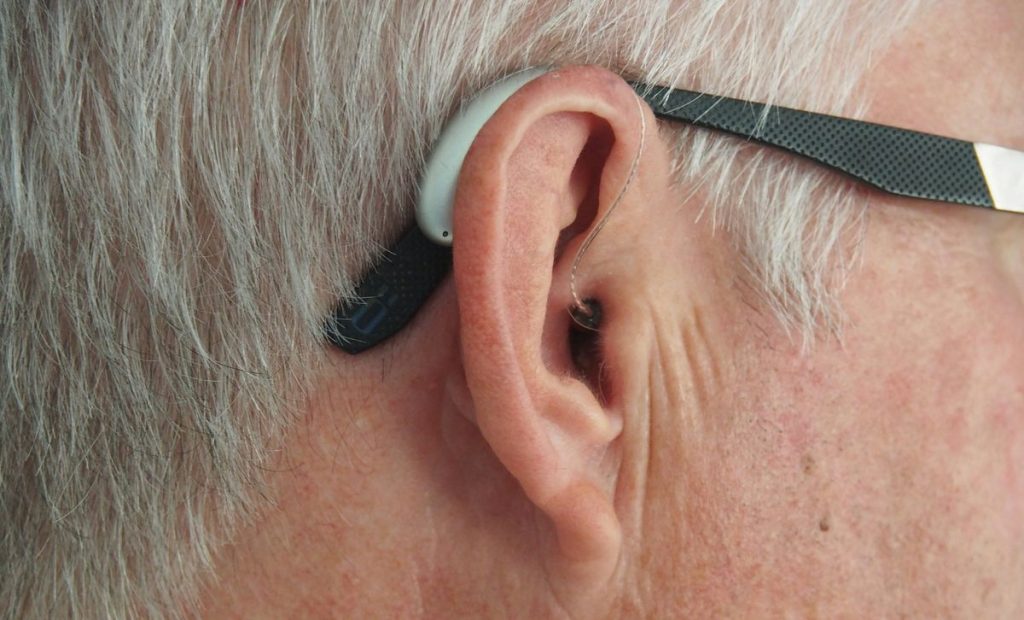
An employee who has managed sight loss for years starts missing parts of conversations in meetings. Another, deaf since childhood and reliant on lip-reading, finds a change in their vision is making faces harder to follow. In both cases the strategies that used to work were built on the sense that is now changing, and an assessment of one sense alone only tells half the story.
A deafblind workplace assessment, also called a dual sensory loss workplace assessment, looks at sight and hearing together, and at how each one affects the other in the person’s real job. Visualise has carried out these assessments for many years. This guide is for occupational health, HR, case managers, insurers and vocational rehabilitation professionals. It is general information, not legal or medical advice.
What deafblindness and dual sensory loss mean
The definition from Department of Health guidance, as quoted by Sense, is: “A person is regarded as deafblind if their combined sight and hearing condition causes difficulties with communication, access to information and mobility. This includes people with a progressive sight and hearing loss.”
Being deafblind does not mean being totally deaf and totally blind: most deafblind people have some sight and some hearing. Other names include dual sensory loss, dual sensory impairment and multi-sensory impairment, and Sense says people should be able to choose the term they identify with. Many people would never call themselves deafblind, and they do not need to.
Born deafblind or acquired later
Sense describes congenital deafblindness, present from birth or apparent within the first two years of life, and acquired deafblindness, which develops later through illness, accident, ageing or a genetic condition such as Usher syndrome. Some people are born with one sensory loss and develop the other later. A deafblind workplace assessment is for any combination of sight loss and hearing loss, whatever the degree of each and however it came about.
How many people are affected
Sense estimates that in 2022 there were over 450,000 deafblind people in the UK, and expects this to rise to over 610,000 by 2035. Around 125,000 of them are estimated to be aged 20 to 69, most of working life. These are modelled estimates, based on research Sense commissioned in 2017 using 2010 prevalence figures, not a count. Deafblind UK gives a similar current figure but projects over 600,000 by 2030, so future numbers are best treated as indicative.
How dual sensory loss can affect work
Most workarounds for one sensory loss lean on the other sense. Someone with hearing loss may lip-read or follow captions; someone with sight loss may rely on listening and speech output. When both senses are affected, those strategies can stop working together, or work only when conditions are just right.
In practice, that can show up as:
- meetings where the person can neither hear clearly nor see faces well enough to lip-read
- missed alerts, such as a phone, a door or a colleague approaching from the side
- tiredness from piecing together partial information all day
- moving around a busy or poorly lit workplace where noise masks sound cues
None of this says anything about a person’s ability to do their job. These are barriers in the environment, the tools and the way work is organised, which is what an assessment addresses.
What a deafblind workplace assessment looks at
The assessment is practical and non-clinical. Depending on the job, it may include:
- Communication: taking part in meetings and keeping in touch with colleagues.
- Information and documents: how the person reads, finds and shares information.
- Computer and phone access: for example magnification, screen readers, braille displays, amplified or captioned phones, and headsets that work with hearing aids.
- Lighting and glare: in the workplace and on screen.
- Alerts and alarms: for example vibrating or visual alerts, so important signals are not missed.
- Getting around: moving around the workplace safely.
- Emergency evacuation planning: including a personal emergency evacuation plan (PEEP).
- Working patterns and fatigue: how the working day can be arranged around the extra effort involved.
- Awareness for colleagues: including awareness training for colleagues and managers.
The assessment is carried out face to face at the workplace, or virtually by video or phone, depending on what works for the person. It takes around two hours. For sight loss only, see our visual impairment workplace assessment; for hearing loss only, our hearing loss workplace assessment.
Adjustments that may be recommended
Recommendations always depend on the person and the role. As examples, adjustments may include:
| Area | Adjustment that may be recommended | Why it helps |
|---|---|---|
| Meetings | One person speaking at a time, good light on faces, a seat chosen by the employee and papers sent in advance in an accessible format | Reduces the need to rely on hearing and sight at the same moment |
| Computer access | Screen magnification, a screen reader or a braille display, set up alongside adjusted audio and captions | Gives more than one route to the same information |
| Phones and headsets | Amplified or captioned phone options and headsets compatible with hearing aids | Makes calls manageable without straining either sense |
| Lighting | Task lighting, less glare from windows and screens, and contrast on edges and steps | Helps with reading, lip-reading and moving around |
| Alerts | Vibrating or visual alerts for phones, doors and messages | Important signals are not missed |
| Getting around | Route familiarisation, clear walkways and advance notice when the layout changes | Builds confidence in the person’s own environment |
| Workload and fatigue | Planned breaks, flexibility over when demanding tasks happen and a quieter workspace | Recognises the extra effort that dual sensory loss takes |
| Team awareness | Awareness training for colleagues and managers | Helps every other adjustment work in daily practice |
What this means for occupational health, HR and case managers
A deafblind workplace assessment is worth considering when:
- an employee has any combination of sight loss and hearing loss that is affecting their work
- one sense was assessed in the past and the other has since changed
- adjustments that used to work have stopped working
- an employee reports fatigue that their current adjustments do not explain
How to refer
Referrals usually come from HR, occupational health or a line manager, and Visualise also works with insurers and case managers. Download the referral form from the deafblind workplace assessment page, complete it and send it back. Self-employed people and individuals can book directly. The employee should agree to the referral before it is made.
Visualise contacts the employee directly within two working days to arrange a time that suits them, and the full report is sent within ten working days. A virtual assessment costs £795 and a face-to-face assessment £995, and the price includes the full written report.
What the report gives you
The report covers the person’s role and tasks, the barriers they face, practical recommendations and adjustments, and who is responsible for each recommendation. Every recommendation is proportionate and specific to the role.
Hints and tips for the employee
- Notice when both senses are under pressure at once, such as in meetings or low light.
- Tell your employer what already works for you.
- You do not need to be registered, or use the word deafblind, to ask for an assessment.
- If your sight or hearing changes, ask for your adjustments to be reviewed.
Building awareness and communication
Small habits make a large difference: saying your name when you approach, facing the person when you speak, checking information has been received, and mentioning layout changes in advance. Awareness training helps teams see that dual sensory loss is more than sight loss plus hearing loss.
Our useful links pages for sight loss and hearing loss list organisations that can help, including Deafblind UK, Sense and Deafblind Scotland.
Legal rights and support
England, Scotland and Wales. Under the Equality Act 2010, a person is disabled where they have an impairment with a substantial and long-term adverse effect on their ability to carry out normal day-to-day activities. Many people with dual sensory loss will meet this definition. The effect of aids such as hearing aids is ignored when judging whether an effect is substantial, although ordinary glasses and contact lenses are taken into account (Schedule 1, paragraph 5). Progressive conditions are covered by paragraph 8, and anyone certified as sight impaired or severely sight impaired by a consultant ophthalmologist is treated as disabled under regulation 7 of the Equality Act 2010 (Disability) Regulations 2010. Where the definition is met, section 20 requires the employer to make reasonable adjustments.
Northern Ireland. The Disability Discrimination Act 1995 places a similar duty on employers to make reasonable adjustments.
Ireland. Under section 16 of the Employment Equality Act 1998, part of the Employment Equality Acts 1998 to 2015, employers must take “appropriate measures”, often called reasonable accommodation, so that a person with a disability can access, take part and progress in employment and undergo training, unless the measures would impose a disproportionate burden. Help with costs may be available through the Work and Access programme: see gov.ie.
Access to Work. Access to Work in England, Scotland and Wales, and the separate Northern Ireland programme, can help eligible people with costs such as specialist equipment and travel to work. It does not replace the employer’s own duty to make reasonable adjustments.
Whether the definition is met for a particular person depends on their circumstances, and this article is general information rather than legal advice.
Summary
Dual sensory loss changes the ground rules for both senses at once, so separate sight and hearing fixes do not always add up to a workable day. A combined assessment looks at the person, the role and the environment together. For referrers, the signs are simple: two senses affected, adjustments that have stopped working, or fatigue nobody can explain. Acting early usually means smaller, simpler changes.
Next step
If you or someone in your team has both sight loss and hearing loss and would like expert, tailored support to stay productive and comfortable at work, you can arrange a deafblind workplace assessment with us.
Frequently asked questions
What is a dual sensory loss workplace assessment?
A practical, non-clinical assessment for someone with both sight loss and hearing loss. It looks at how the two together affect their real job and ends in a report with specific recommendations. It is the same as a deafblind workplace assessment.
How is it different from a sight loss or hearing loss assessment?
It looks at both senses together, because many strategies for one sensory loss rely on the other.
Does the employee need to be registered as deafblind?
No. They do not need to be registered, have a certificate or describe themselves as deafblind.
Can the assessment be done virtually?
Yes, by video or phone, or face to face at the workplace, depending on what works for the person.
Sources
Sense, Deafblindness (information and advice, updated August 2026): https://www.sense.org.uk/information-and-advice/conditions/deafblindness/
Sense, Deafblindness statistics in the UK (updated June 2026): https://www.sense.org.uk/about-us/research/deafblindness-statistics-in-the-uk/
Deafblind UK, What is deafblindness?: https://deafblind.org.uk/get_support/what-is-deafblindness/
Equality Act 2010, Schedule 1, Part 1: https://www.legislation.gov.uk/ukpga/2010/15/schedule/1/part/1
Equality Act 2010, section 20: https://www.legislation.gov.uk/ukpga/2010/15/section/20
Equality Act 2010 (Disability) Regulations 2010, regulation 7: https://www.legislation.gov.uk/uksi/2010/2128/regulation/7
Disability Discrimination Act 1995, section 4A: https://www.legislation.gov.uk/ukpga/1995/50/section/4A
Employment Equality Act 1998 (revised), section 16: https://revisedacts.lawreform.ie/eli/1998/act/21/revised/en/html
GOV.UK, Access to Work: https://www.gov.uk/access-to-work
nidirect, Access to Work (NI): https://www.nidirect.gov.uk/articles/access-work-practical-help-work
gov.ie, Work and Access: https://www.gov.ie/en/department-of-social-protection/services/work-and-access/
Note on sources: the UK figures are modelled estimates from Sense, and Sense and Deafblind UK give different projections. This article is general information and is not legal advice.