
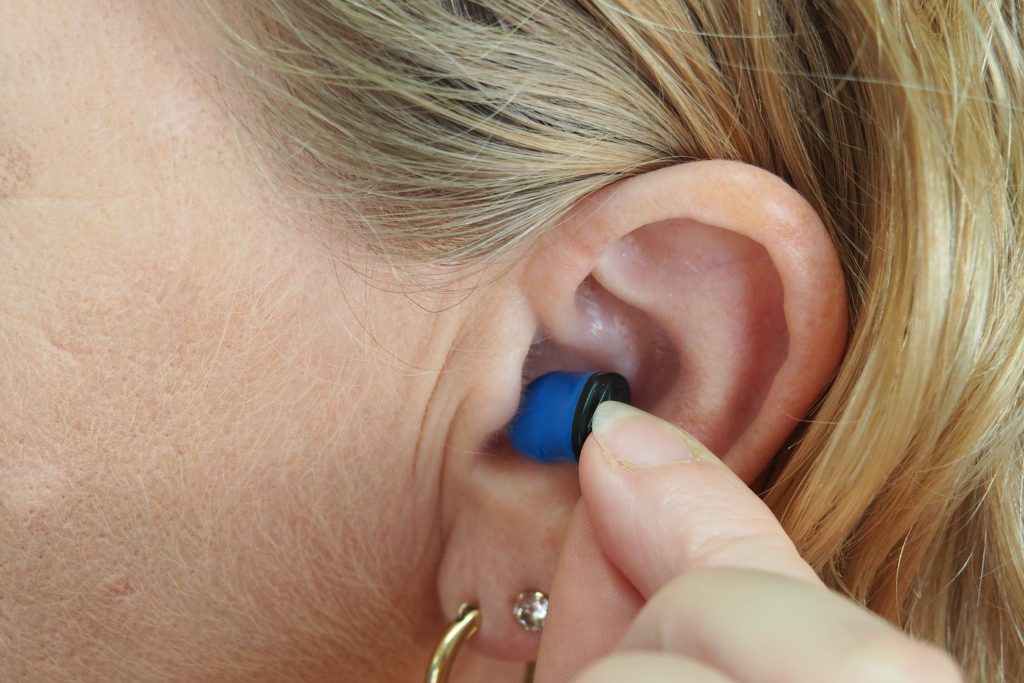
Hearing loss is easy to hide and exhausting to live with. The colleague who nods along in the noisy meeting, laughs a beat after everyone else and volunteers for the tasks that avoid the telephone may be managing a hearing loss nobody at work knows about. Many people carry on like that for years. By the end of each day they are worn out, not by the job, but by the constant effort of filling in the words they did not catch. A hearing loss workplace assessment replaces that daily effort with proper support.
What the assessment is
It is a specialist, practical assessment of how an employee’s hearing affects them in their role. It is not a hearing test, and it is not an occupational health examination. An assessor with real expertise in hearing loss talks through the person’s duties and identifies exactly where the barriers sit: telephone calls, video meetings, background noise in open plan offices, group conversations, tannoy announcements, alarms, and the tinnitus that often comes alongside hearing loss and makes concentration harder still.
The employee does most of the talking, because they are the expert in what they experience. The assessor’s job is to connect that experience to solutions that actually work, including how any recommended technology performs with the employee’s own hearing aids, which is checked with the supplier before anything is purchased.
The adjustments that change everything
The written report gives the employer specific recommendations with suppliers and indicative costs. Depending on the person and the role, these often include wireless microphone and streaming systems that deliver a speaker’s voice directly to the employee’s hearing aids, speech to text software that provides live captions for calls and meetings, headsets designed for hearing aid users, changes to where the person sits so background noise works for them rather than against them, and improvements to room acoustics in spaces the whole team will benefit from.
Alongside the technology sit the free adjustments: cameras on in video calls so faces can be seen, agendas and key decisions in writing, one voice at a time in meetings. Modest changes, consistently applied, carry remarkable weight.
Who it is for
You do not need to consider yourself disabled, or even to wear hearing aids, for a hearing loss workplace assessment to be worthwhile. Hearing loss at work runs from the person with mild loss in one ear who struggles only in the noisiest meetings, to the long-time hearing aid user, to someone newly fitted and still getting used to how the world sounds. Each of them faces different barriers, and the assessment is shaped around the individual and their actual role, whether that is a call centre, a classroom, a warehouse or a boardroom.
Fatigue, tinnitus and the cost nobody sees
Listening with a hearing loss is active work. Where colleagues hear a conversation, the person with hearing loss is assembling one, combining fragments of sound, lip patterns, context and guesswork, hour after hour. Audiologists call the result listening fatigue, and it is one of the most common things employees describe to me: arriving home too drained to speak to their own family. Tinnitus adds another layer, a constant internal noise that makes quiet concentration harder and stressful days louder. An assessment takes both seriously, because adjustments that reduce listening effort, from streamed audio to captioned meetings to a quieter seating position, give the person their energy back as well as the words.
Getting the room right
Some of the most effective recommendations are about the space rather than the person. Hard floors, bare walls and glass partitions bounce sound around until speech smears into noise, and a meeting room that echoes is hard work for everyone and hardest of all for hearing aid users, because hearing aids amplify the reverberation along with the voice. Soft furnishings, carpet, acoustic panels and sensible room choices calm all of that down. Where a workplace needs it, the report can also recommend a specialist acoustic survey, so investment goes where it will genuinely change the sound of the room.
Saying it out loud
Perhaps the most important thing a hearing loss workplace assessment does is make the invisible visible, in a safe and constructive way. The employee finally gets to describe what their working day actually costs them, often for the first time, and the employer gets a practical plan instead of a vague worry. Hearing loss awareness training for the wider team then keeps the change going, because adjustments work best in a team that understands why they matter.
Signs it might be time to arrange one
Common triggers include finding meetings more tiring than they used to be, relying more heavily on lipreading or guesswork than you’d like to admit, a recent hearing aid fitting that hasn’t yet translated into confidence at work, or a role that’s changed to involve more calls or client contact. None of these needs to be dramatic to be worth acting on.
Frequently Asked Questions
No. The assessment is shaped around your actual experience at work, whatever stage you're at, from mild loss in one ear to a long-established hearing aid user.
Where technology is recommended, the assessor checks compatibility with your own hearing aids with the supplier before anything is purchased, so equipment is matched properly rather than picked from a generic list.
Yes. Audiologists use the term listening fatigue to describe the extra cognitive effort of assembling speech from partial information, and it's one of the most consistently reported experiences among people I assess.
The assessment still applies. Recommendations can be built around variability, for example prioritising captioned or streamed audio on harder days rather than assuming a single fixed level of need.
The practical route
Employers in England, Scotland and Wales have a duty to make reasonable adjustments under the Equality Act 2010, and Access to Work, the government scheme at gov.uk, may share the cost of equipment and support. The assessment report gives both the evidence they need. You can read more about our hearing loss workplace assessments, and our deaf and hearing loss awareness e-learning helps colleagues understand what their teammate has been managing all along.